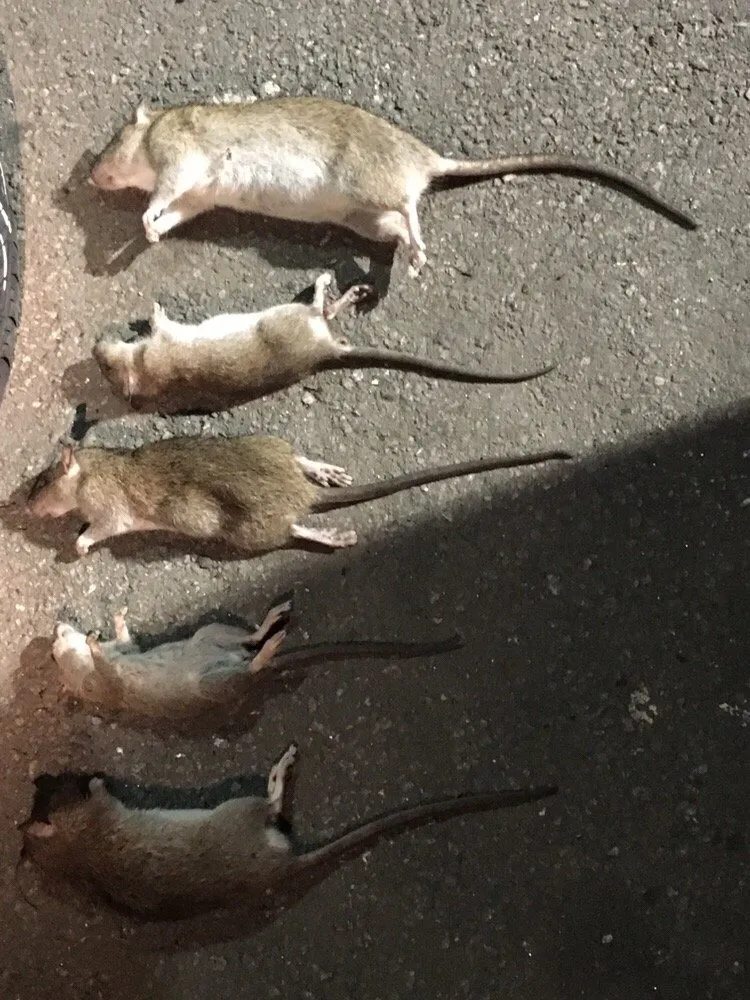
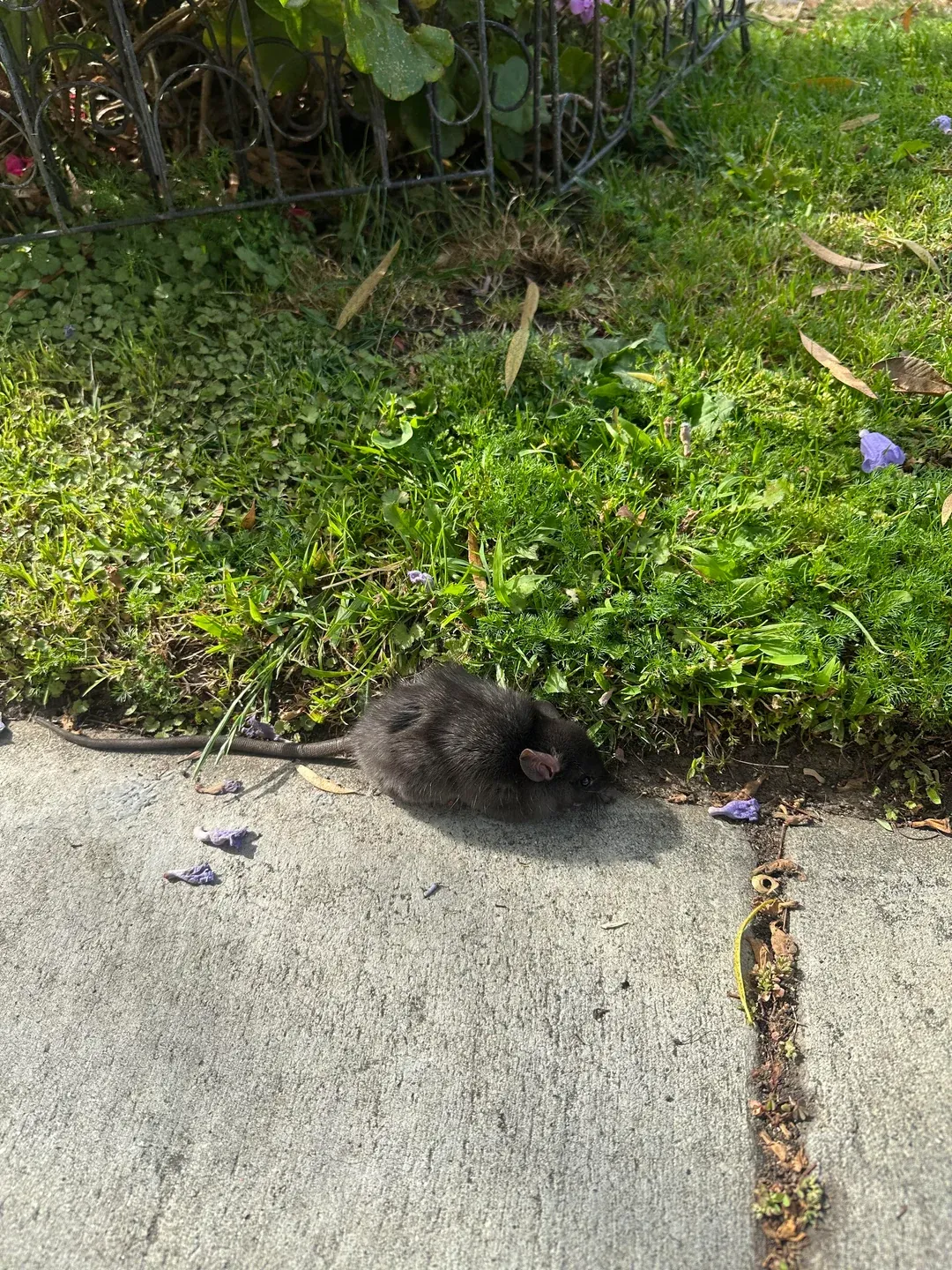
Long Beach hands roof rats one thing they value above all: connected routes. A rat leaves a fruit tree, crosses a fence, climbs the ivy, steps onto a palm frond, and reaches the eave without touching open ground once. Mild coastal weather keeps that network open in all 12 months.
Removing every tree is not the answer. Break the route, pull the food, and make the building itself hard to enter.
Why palms work like ladders
Rough trunks and hanging dead fronds give a rat grip and cover at the same time. When fronds touch a roof, a balcony, a cable, or the next tree over, they build a direct bridge. Roof rats weigh 5 to 9 oz (140 to 255 g) and balance well, so they cross that bridge after dark with almost no exposure.
From the ground, look for:
- Fronds resting on tile, gutters, or an upper wall.
- Old skirts of dead palm material wrapped around the trunk.
- Utility lines running from a palm-side pole toward the roof.
- Dark rub marks along the same fence rail or ledge.
Do not climb or cut anywhere near electrical lines. A licensed tree company should handle elevated or utility-adjacent pruning.
Fruit puts food next to shelter
Citrus, avocados, loquats, figs, and backyard vegetables all feed roof rats. Hollowed fruit still hanging on the branch is the strongest clue you can find, since it proves feeding happened above the ground.
Pick ripe fruit as it turns and collect windfall before evening. Clear bird seed and outdoor pet food on the same pass. These steps cut the reward, and they do nothing about rats already nesting in your attic.
Ivy and fences close the loop
Heavy ivy hides movement and carries rats straight up a wall. Wood fences and block walls link 5 or 6 yards together without pushing the animal into the street. In dense blocks like Belmont Shore, Naples, and Bixby Knolls, one property takes pressure from a much larger connected area.
Open a visible inspection strip beside the structure. Thin vines back from eaves, vents, cable penetrations, and roof junctions. Keep any fence-to-roof connection out in the open where you can see it.
Where the route ends
After reaching the building, a roof rat tests the weak points in order:
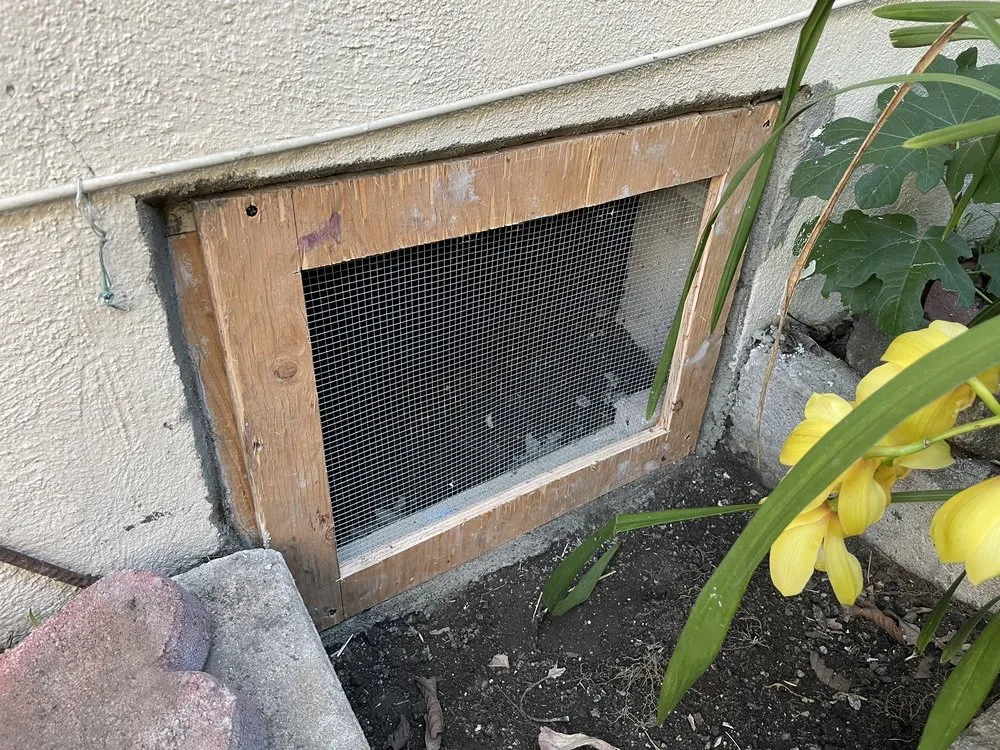
- Loose or rusted gable vent screening.
- Open soffit returns and weathered fascia.
- Gaps where a lower roof meets a taller wall.
- Tile edges, cable penetrations, and damaged attic vents.
- Openings around additions and old repairs.
Coastal air, sun, and building age wear screens and sealant down. The opening often sits on the opposite side of the attic from the room where you hear the noise.
A prevention sequence that works
- Photograph the roof connections from safe ground level.
- Pick up fruit, seed, and pet food every evening.
- Book safe pruning for anything touching the structure.
- Check reachable vent screens, fascia, and utility penetrations.
- Clear the attic rats before any final sealing happens.
Sealing the last active opening too early shuts rats inside. Our rat control service names the species and the route before the first trap goes down. Rodent exclusion covers the sealing that follows, and we lay out the full property plan on our main service page.
- #roof rats
- #palm trees
- #fruit trees
- #Long Beach